
UAV Brushless Motor Selection Guide for Industrial and Agricultural Drones
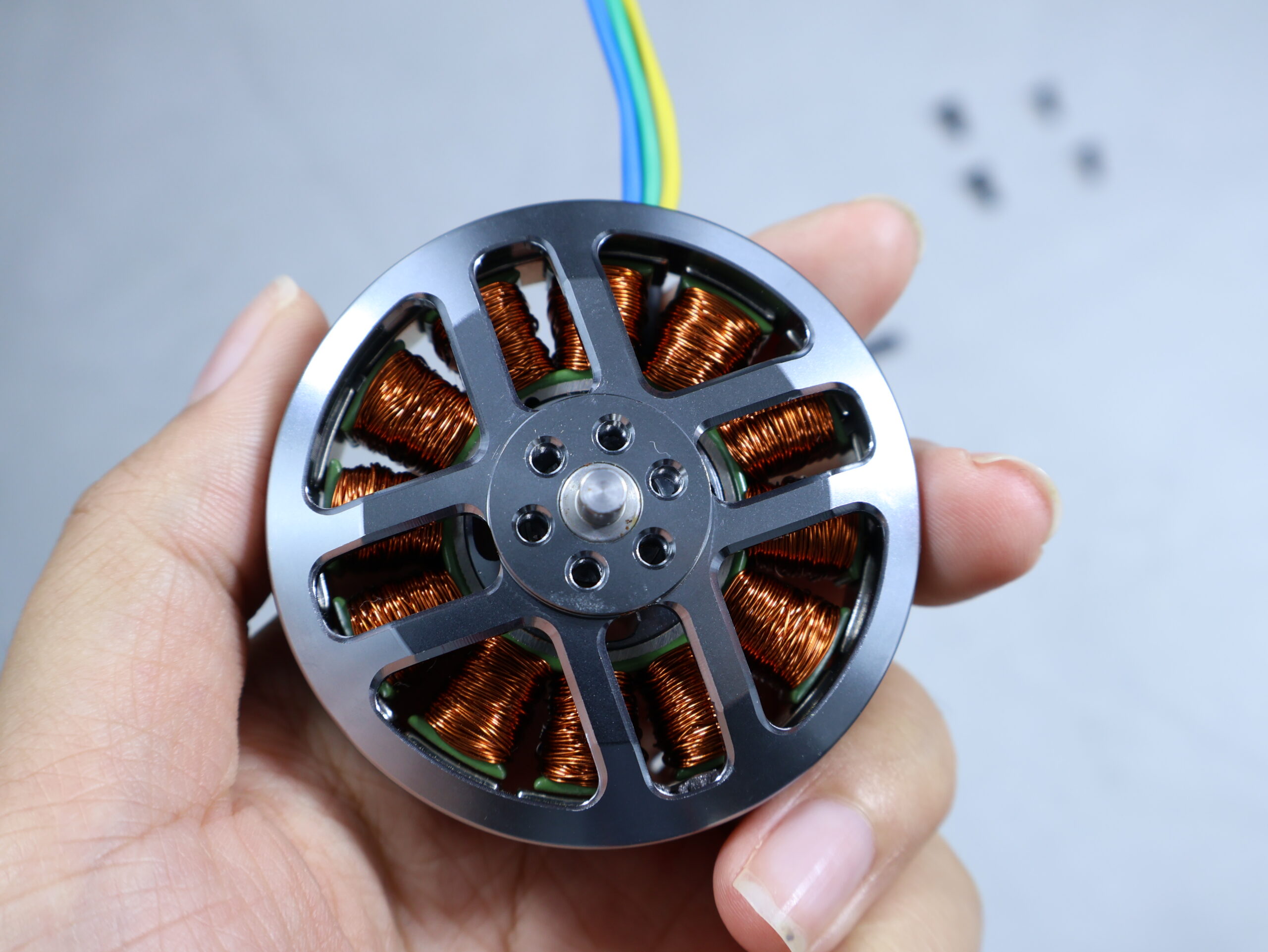
A UAV brushless motor should be selected from the full propulsion setup, not from KV or maximum thrust alone. The right choice depends on propeller size, battery voltage, ESC current, takeoff weight, payload, flight time target and mission type. For industrial and agricultural drones, the best motor is usually the one that can hold efficient mid-throttle thrust without overheating.
However, that sounds less exciting than a big peak-thrust number. In practice, it is also how real UAV projects survive field work. For this reason, a spraying drone, a mapping drone and a cinematic platform may all use brushless motors, but they do not ask the motor to do the same job.
Start with the mission, not the motor model
Before choosing a UAV brushless motor, define the mission first. Is the aircraft carrying liquid payload, survey equipment, a camera gimbal, delivery cargo or a sensor module? Also, is the drone expected to fly short high-power missions, or long stable routes at moderate throttle?
In agricultural spraying, the motor must handle changing payload as the tank empties. By contrast, mapping and inspection drones often need stable thrust and low vibration more than extreme peak power. Meanwhile, heavy-lift industrial platforms make heat control and thrust reserve the main safety questions.
This is why a professional motor recommendation normally starts with seven details: propeller size, battery voltage, ESC current, aircraft type, target takeoff weight, payload, and quantity or customization needs.
Match KV with propeller size and voltage
KV means revolutions per minute per volt under no load. It is not a direct power rating. As a result, a higher KV motor spins faster at the same voltage. By comparison, a lower KV motor usually works better with larger propellers, more torque and lower RPM.
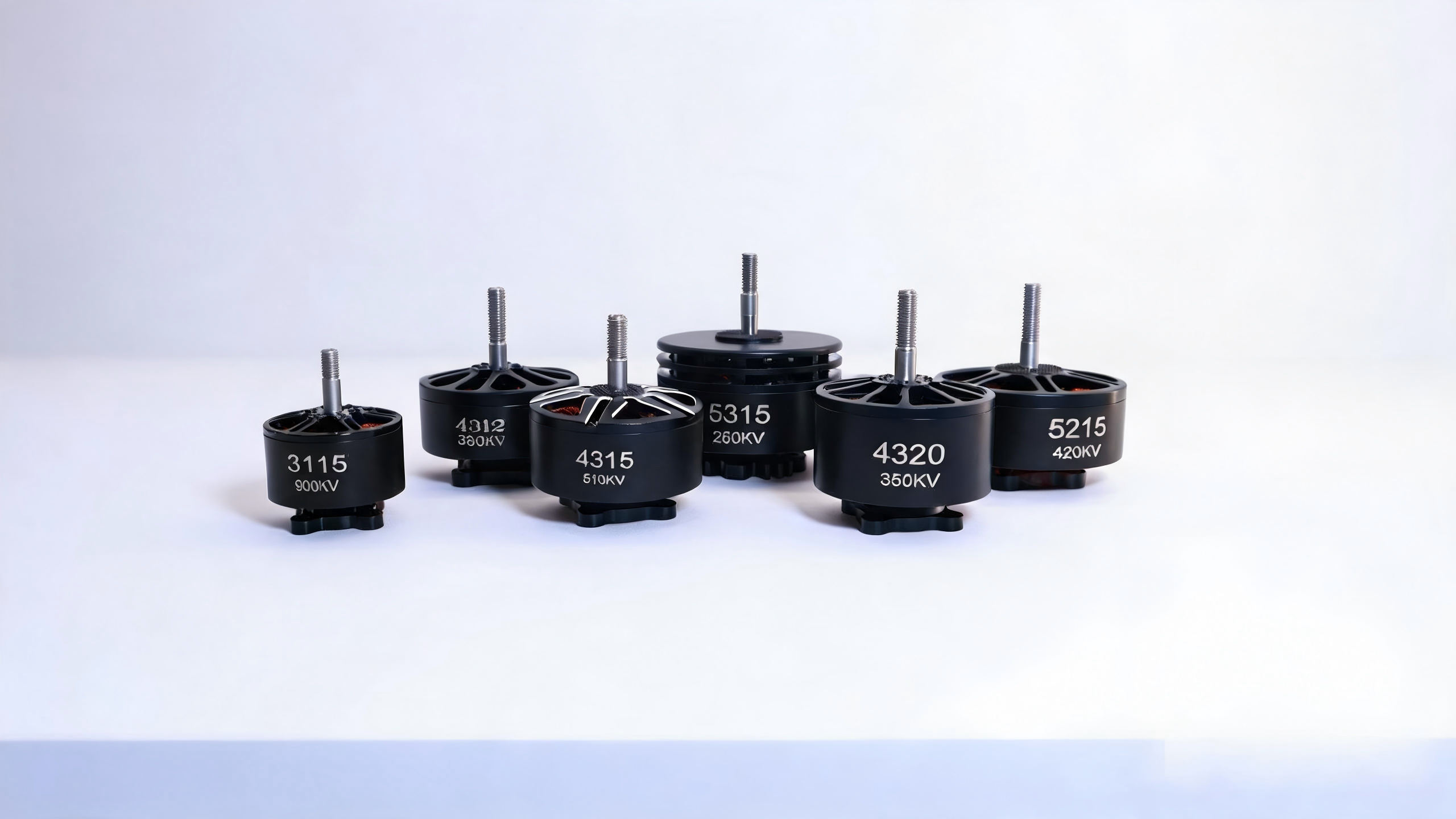
For example, a compact 10 inch UAV platform can use a higher KV motor such as 3115 900KV on 6S. In many cases, a 13-15 inch industrial platform moves toward 380KV, 420KV or 600KV depending on voltage and load. Meanwhile, a 17 inch cinematic platform normally needs lower KV and smoother torque delivery.
The important point is balance. If the KV is too high for a large propeller, current can rise quickly and heat will build up. If the KV is too low for the propeller and voltage, the aircraft may feel slow or inefficient. Therefore, always check the motor, propeller, ESC and battery together.
Choose the voltage platform before finalizing the motor
Most importantly, voltage changes the whole propulsion system. For example, a 6S setup is common for compact and medium drones. In addition, an 8S setup gives many agricultural and industrial drones more room for efficient thrust. Finally, a 12S setup can reduce current for heavy-load platforms, but it also requires compatible ESCs, batteries, connectors and wiring.
For example, Pi Thrust 3115 is positioned around compact 6S platforms. 5215 is commonly used as an 8S agricultural drone motor. 4320 and 5315 are more suitable when the platform needs heavy-lift output and a stronger voltage plan.
However, do not upgrade voltage just because it looks stronger. If the frame, ESC, propeller and battery pack are not designed for it, the result can be heavier, more expensive and harder to maintain.
Check thrust at working throttle, not only peak thrust
Peak thrust is useful, but it is not the whole answer. After all, a drone rarely works at full throttle for the entire mission. What matters in field use is how much thrust the motor can hold at the normal working range, how hot it gets, and how much efficiency remains when the aircraft carries payload.
In Pi Thrust selection work, we look at the combination of thrust, current, power, efficiency and temperature behavior. In some payload UAVs, a motor that looks smaller on paper may be better if it runs cooler and more efficiently at the actual hover point.
Before final selection, if the aircraft is still in design stage, estimate total takeoff weight first. Next, divide the needed lift across the number of motors. After that, leave enough reserve for wind, maneuvering, battery voltage drop and payload variation.
Do not ignore ESC current and firmware behavior
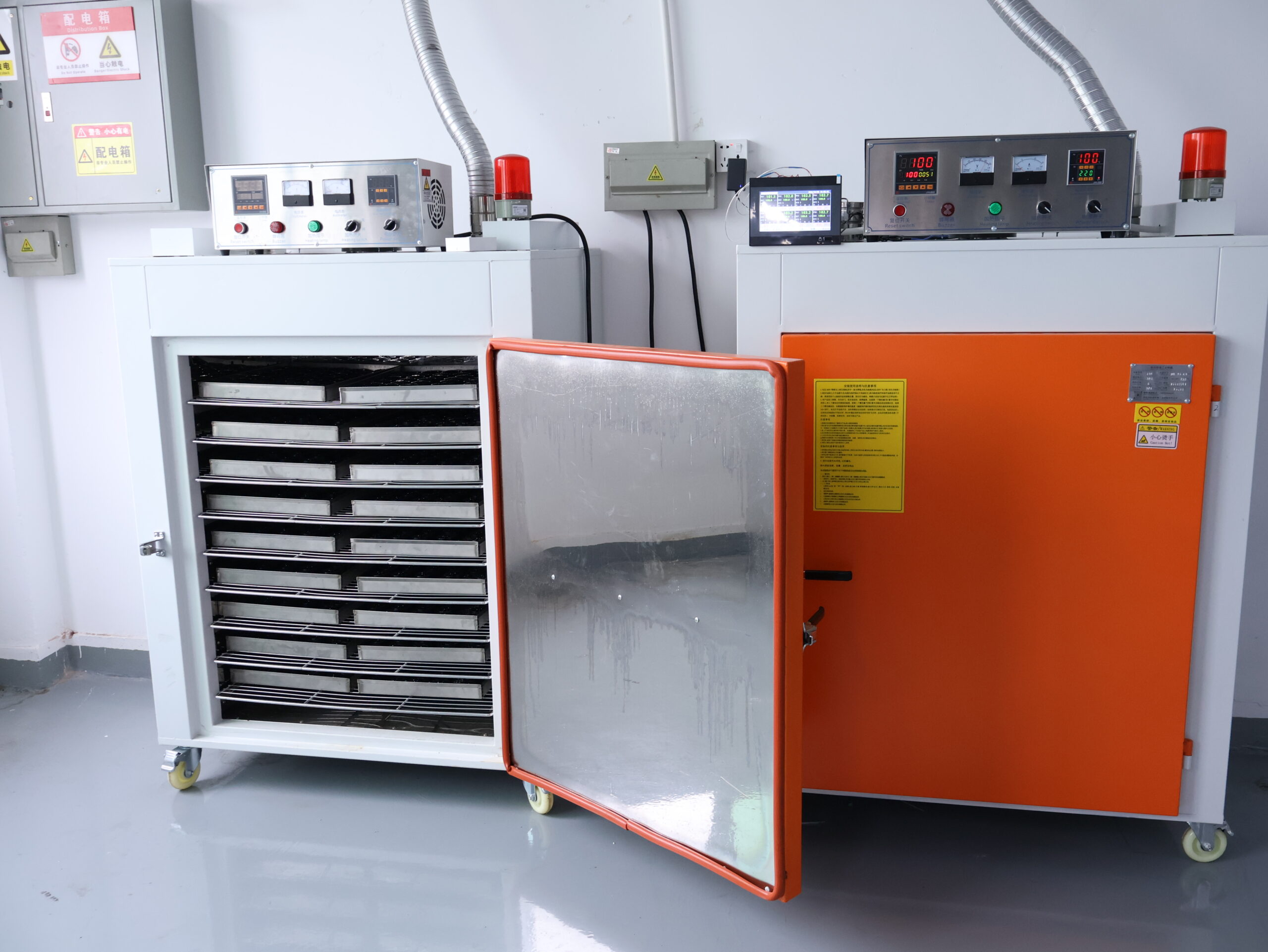
A drone brushless motor only works well when the ESC can drive it safely. The ESC must support the battery voltage, continuous current, peak current and control style required by the motor and propeller. For heavier UAVs, ESC margin is not a luxury. Instead, it is part of reliability.
In addition, FOC compatibility, startup behavior and low-throttle stability can also matter. For example, a mapping UAV may spend long periods in a steady load range. Meanwhile, a spraying UAV may see changing load and outdoor heat. On the other hand, a heavy-lift UAV may demand high current during takeoff. Therefore, these cases should not be judged by motor specs alone.
When in doubt, send the planned ESC model and firmware type along with the motor inquiry. This step saves time and prevents a mismatch that only appears after assembly.
Pi Thrust UAV brushless motor lineup
At the product level, Pi Thrust currently focuses on UAV brushless motors for 10-18 inch propulsion systems. The series covers compact inspection drones, mapping UAVs, agricultural spraying drones, cinematic aerial platforms and heavy-lift industrial aircraft.
| Series | KV | Voltage | Propeller | Max thrust | Best-fit applications |
|---|---|---|---|---|---|
| 3115 | 900KV | 6S | 10 inch | 4,600g | Compact mapping, inspection, security and FPV platforms |
| 4312 | 380KV | 8-12S | 13-15 inch | Use latest test report | Mapping, survey, inspection and aerial platforms |
| 4315 | 600KV | 8S | 13-15 inch | 7,200g | FPV, inspection, security and medium industrial drones |
| 4320 | 350KV | 12S | 13-15 inch | 12,900g | Heavy-lift inspection, security and large industrial UAVs |
| 5008 | 300KV | 6S | 17 inch | 2,800g | Cinematic UAVs, long-endurance aerial platforms and low-vibration payloads |
| 5215 | 420KV | 8S | 13-15 inch | 5,500g | Agricultural spraying, payload UAVs and heavy-lift inspection |
| 5315 | Confirm KV before final publish | 12S | 15-17 inch | 8,400g class | Agricultural, heavy-lift and large industrial UAVs |
One note: for the 5315 series, confirm the final KV version before publishing a fixed external claim. Current operating materials include both 260KV and 420KV references. Therefore, if the project needs 5315, use propeller size, voltage, thrust target and test report as the final selection basis.
Selection by application
Agricultural spraying drones
Agricultural drones need torque, cooling and payload stability. The motor must handle changing tank weight, outdoor heat and repeated takeoff cycles. For many 13-15 inch platforms, start with 5215 420KV. However, for heavier setups, compare 4320 and 5315 after confirming voltage and propeller size.
Industrial inspection drones
Inspection UAVs often care about stability, uptime and low vibration. Power line, security and infrastructure inspection drones may carry cameras or sensors, so the motor should not introduce unnecessary vibration. 3115, 4312 and 4320 can be evaluated depending on size and payload.
Mapping and surveying drones
Mapping drones need repeatable thrust and efficient cruise. Flight time and smooth control are usually more important than extreme acceleration. For compact mapping platforms, 3115 can fit 10 inch propeller designs. Meanwhile, for larger mapping UAVs, 4312 is a better starting point.
Cinematic and aerial platforms
Cinematic UAVs need smooth thrust, low vibration and longer endurance with larger propellers. The 5008 300KV motor is built for 17 inch propeller platforms where stable, efficient lift matters more than aggressive throttle response.
Heavy-lift industrial UAVs
Heavy-lift drones should be selected with more conservative margins. The motor, ESC, propeller and battery must all survive high load. Pi Thrust 4320 and 5315 are the main options to review for high payload industrial UAVs.
What Pi Thrust checks before recommending a motor
A useful recommendation starts with the airframe, not the catalog. Pi Thrust normally checks propeller size, battery voltage, ESC current, motor count, target takeoff weight, payload, flight time target and operating environment.
For B2B buyers, we can also discuss custom KV, laser logo, cable length, connector type, color and packaging. In addition, for project orders, test reports can be prepared to help compare thrust, current and efficiency before bulk purchase.
Every serious UAV motor decision should be verified with data. In most projects, a sample order, bench test or matched propulsion review is cheaper than redesigning a drone after the wrong motor has already been installed.
Recommended selection workflow
- Confirm aircraft type, payload and target takeoff weight.
- Choose the propeller size that fits the frame and mission.
- Select a voltage platform such as 6S, 8S or 12S.
- Shortlist the motor KV and stator size for that propeller and voltage.
- Check ESC continuous current, peak current and firmware behavior.
- Review thrust, current, efficiency and temperature in the working throttle range.
- Test samples before bulk order, especially for agricultural and heavy-lift UAVs.
Ask Pi Thrust for motor selection support
If you are choosing a UAV brushless motor for an industrial or agricultural drone, send your propeller size, battery voltage, ESC current, motor count, takeoff weight, payload and application. Then, Pi Thrust can recommend a suitable motor series and support custom KV, logo, cable, connector and packaging for qualified orders.
Finally, contact Pi Thrust at info@pithrust.com for motor selection support, sample orders and B2B supply projects.
Need help choosing a UAV brushless motor?
Send propeller size, voltage, ESC current, takeoff weight, payload and application to info@pithrust.com. Pi Thrust can recommend a motor series and support custom KV, logo, cable, connector and packaging for B2B orders.
FAQ
What is the best UAV brushless motor for agricultural drones?
For most agricultural spraying drones, start with payload, propeller size and voltage. For example, Pi Thrust 5215 is a strong 8S option for 13-15 inch propellers. However, for heavier 12S platforms, 4320 or 5315 can be shortlisted after checking takeoff weight, ESC current and propeller plan.
How do I choose KV for a UAV brushless motor?
Choose KV together with propeller size and voltage. Generally, higher KV motors suit smaller propellers and faster response. By contrast, lower KV motors suit larger propellers, higher torque and longer endurance. Therefore, do not choose KV only from the model name.
Should I select 6S, 8S or 12S for an industrial drone motor?
Use 6S for compact platforms, 8S for many medium industrial and agricultural UAVs, and 12S when the aircraft needs higher power with lower current. In the end, the final choice depends on ESC rating, battery layout, propeller size and payload.
How much thrust should each drone motor provide?
A practical starting point is to keep enough thrust reserve above the hover requirement. In addition, heavy payload UAVs usually need more reserve than mapping drones. Then, share takeoff weight, payload and motor count so Pi Thrust can calculate a safer recommendation.
Can Pi Thrust customize UAV brushless motors?
Yes. In addition, Pi Thrust can support custom KV, laser logo, cable length, connector type, color and packaging for qualified orders. Before customization, share your motor target, voltage, propeller, ESC, quantity and delivery plan.
What information should I send before asking for a motor recommendation?
First, send propeller size, battery voltage, ESC current, aircraft type, target takeoff weight, payload, flight time target, quantity and any customization needs. As a result, these details help avoid a motor that overheats, wastes power or cannot lift the payload safely.

 English
  Arabic
  French
  Russian