
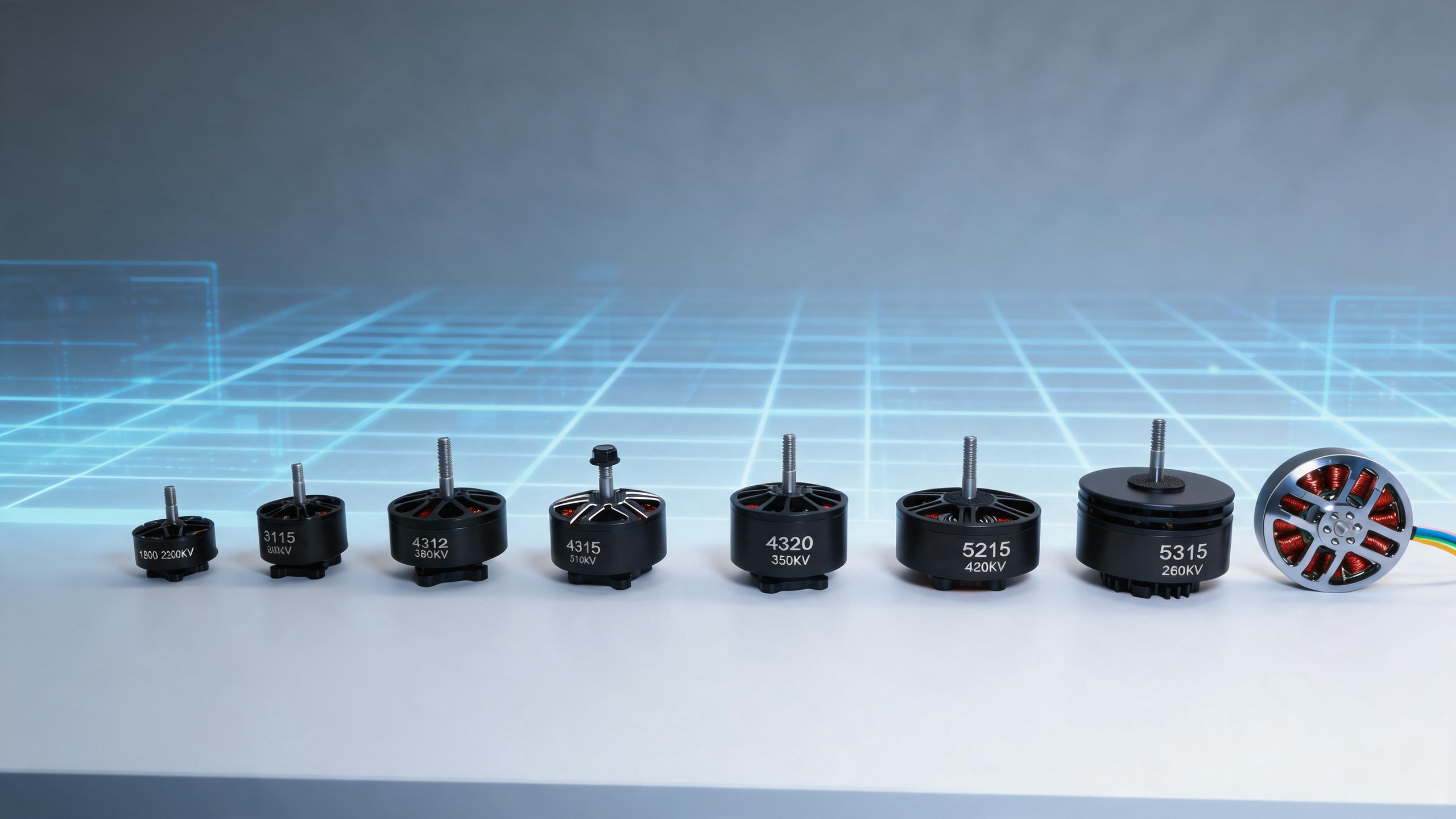
Best Drone Motor Selection Guide for Industrial UAVs: How to Choose KV, Thrust, Size, and Voltage
Choosing the right drone motor matters. It affects lift, efficiency, flight time, and motor temperature.
A poor match can hurt the whole aircraft. As a result, it can also raise maintenance cost over time.
This guide is for industrial UAV buyers, engineers, integrators, and OEM teams. In short, it explains how to compare motors in a practical way.
What This Guide Covers
Who this article helps
This guide is useful for agriculture drone manufacturers, mapping teams, LiDAR integrators, inspection UAV builders, and industrial distributors. In addition, it is useful for OEM and ODM projects.
What you will learn
- Why motor selection affects stability, efficiency, and payload margin
- What KV, thrust, stator size, and voltage mean in real use
- How to estimate the thrust your UAV needs
- How to choose between 6S, 8S, and 12S systems
- Which Pi Thrust motor fits each mission type
- How to select the right motor step by step
- Why Pi Thrust suits industrial UAV projects
- Answers to common drone motor questions
Why Drone Motor Selection Matters
Motor choice changes flight performance
A drone motor does not work alone. Instead, it works with the frame, propeller, ESC, battery, payload, and flight mission.
If those parts do not match well, the drone may still fly. However, it will often run hotter and lose efficiency.
Industrial UAV missions need better matching
Agriculture drones need torque and load stability. Meanwhile, mapping drones need efficient hover and longer endurance.
Inspection drones need fast response and smooth control. Likewise, delivery drones need lift margin and reliable thermal behavior.
What good motor matching improves
- Payload stability: better control under changing load
- Thermal headroom: less stress on windings, bearings, ESCs, and connectors
- Flight efficiency: better use of battery energy
- Safety margin: more control in wind, climbs, braking, and recovery
In short, the right motor helps the aircraft fly better. It also helps the system last longer.
Drone Motor Specs Explained
Four specs shape most buying decisions
Most buyers compare four core items first. Specifically, these are KV rating, maximum thrust, stator size, and voltage compatibility.
| Specification | Meaning | Why It Matters | Buyer Focus |
|---|---|---|---|
| KV Rating | Motor RPM per volt with no load | Affects prop matching, torque, and response speed | Pick KV after the propeller range is clear |
| Maximum Thrust | Peak lift with a given prop and voltage | Shows ceiling, not full working comfort | Look at usable margin, not only the peak number |
| Stator Size | Core diameter and height, such as 5315 | Affects torque, cooling, and power handling | Treat it as the motor’s physical class |
| Voltage | Supported battery system, such as 6S or 12S | Changes current, heat, and efficiency | Higher voltage often suits heavier work |
KV rating
Lower KV usually works better with larger propellers. Therefore, it favors torque and heavier lift.
Higher KV usually works better with smaller propellers. By contrast, it favors quicker response and lighter builds.
| KV Range | Propeller Range | Flight Character | Typical Use |
|---|---|---|---|
| 300 to 400 KV | 15 to 22 inch | High torque, lower RPM | Heavy lift, agriculture, endurance work |
| 400 to 500 KV | 13 to 17 inch | Balanced torque and response | Agriculture, patrol, utility UAVs |
| 500 to 700 KV | 10 to 15 inch | More responsive, medium thrust | Inspection and medium-load work |
| 700 to 1000 KV | 7 to 12 inch | Fast response, lighter-load focus | Compact mapping and agile builds |
Simple rule: choose the propeller range first. Then choose the KV range that drives it well.
Maximum thrust
Maximum thrust is helpful. However, it should not be your only filter.
A good industrial setup needs reserve. Otherwise, a motor that always flies near its limit will run less comfortably.
Stator size
Stator size tells you a lot about the motor. For example, it often explains differences in torque, cooling, and power handling.
Two motors can share the same KV. Even so, they can still behave very differently in real work.
Voltage
Voltage changes current draw. In addition, it changes heat and system efficiency.
Higher-voltage systems often suit heavier UAV tasks. As a result, they usually help the motor, ESC, and wiring run cooler.
How Much Thrust Your Drone Needs
Start with a basic ratio
A common starting point is total thrust at about double the loaded takeoff weight. That gives a 2.0:1 thrust-to-weight ratio.
Formula:
Per-motor thrust target = (loaded takeoff weight × target thrust ratio) ÷ number of motors
Example calculation
If a drone weighs 12 kg and uses four motors, each motor should target about 6 kg of thrust at a 2.0:1 ratio.
When to add more margin
Wind, altitude, and variable payload increase risk. Therefore, more thrust margin is usually a better design choice in those cases.
| Drone Type | Loaded Weight | Per-Motor Target | Pi Thrust Direction |
|---|---|---|---|
| Light compact UAV | 0.5 to 1.5 kg | 0.25 to 0.75 kg | 3115-900KV |
| Mapping or survey | 3 to 6 kg | 1.5 to 3.0 kg | 3115-900KV or 4312-380KV |
| Inspection or patrol | 5 to 8 kg | 2.5 to 4.0 kg | 4315-600KV or 5215-420KV |
| Delivery or heavy payload | 15 to 25 kg | 3.75 to 6.25 kg | 4320-350KV or 5315-420KV |
| Heavy agriculture | 25 to 35 kg | 6.25 to 8.75 kg | 5315-420KV |
As aircraft weight rises, a bigger motor may not be enough. In that case, a different aircraft layout may be the better answer.
6S vs 8S vs 12S
Why voltage matters
Battery voltage is not a small detail. Instead, it changes current draw, heat buildup, and overall electrical comfort.
Higher voltage usually means lower current for the same power. Therefore, it can help heavier systems work more efficiently.
| Voltage | Current Draw | Efficiency Direction | Best Fit |
|---|---|---|---|
| 6S | Higher | Good for lighter systems | Compact UAVs and agile builds |
| 8S | Medium | Balanced upgrade path | Inspection and mid-range industrial work |
| 12S | Lower | Best for demanding heavy-load use | Agriculture and heavy-lift UAVs |
Choose voltage early
If your aircraft carries real payload and works for long periods, choose voltage early in the design process. Otherwise, it becomes an afterthought.
Best Pi Thrust Motors by Application
Agriculture drones
These platforms need larger propellers, stronger torque, and better load stability over long work cycles.
- Best fit: 5315-420KV
- Alternative: 5215-420KV for lighter utility work
- Why: stronger stator size and industrial-duty design
Mapping and LiDAR drones
Mapping UAVs need efficient hover and enough capacity for sensors without making the aircraft too heavy.
- Best fit: 4312-380KV
- Alternative: 3115-900KV for lighter compact builds
- Why: good choices for either endurance or agility
Inspection and patrol drones
Inspection aircraft need stable hover, predictable response, and enough lift for cameras or thermal payloads.
- Best fit: 4315-600KV
- Alternative: 5215-420KV when extra lift reserve is needed
- Why: balanced response and payload support
Heavy lift and delivery drones
These UAVs benefit from strong torque, lower current draw, and good thermal headroom.
- Best fit: 4320-350KV
- Alternative: 5315-420KV for larger-prop systems
- Why: better support for heavy-duty operation
Long-endurance platforms
Some builds care more about steady efficiency than maximum payload. In those cases, low-load efficiency matters more.
- Best fit: 5008-300KV
- Why: suitable for endurance-focused builds
Agile compact builds
Smaller propellers and quicker response push the design toward higher KV choices.
- Best fit: 3115-900KV
- Why: strong fit for compact and agile use
Quick shortlist tip
If you already know your takeoff weight, propeller size, and battery voltage, start with the Pi Thrust motor lineup. Then narrow the choice by thrust target and mission type.
How to Select the Right Motor Step by Step
Step 1: define loaded takeoff weight
Use the heaviest realistic flight condition. First, include battery, payload, landing gear, wiring, and mission equipment.
Step 2: set thrust margin
Choose a thrust target that fits the mission. Next, remember that harder missions need more margin than standard use.
Step 3: choose propeller range
Frame clearance, blade size, and efficiency goals all shape the propeller decision. Then, once that is clear, KV becomes easier to choose.
Step 4: match KV and voltage
Do not choose KV in isolation. Instead, match it to the propeller, then choose a voltage system that keeps current and heat under control.
Step 5: verify ESC and wiring
Motor selection is not complete if the rest of the electrical system is undersized. So, check ESC rating, connector rating, and wiring gauge.
Step 6: adjust for real conditions
Altitude, heat, dust, and long duty cycles all reduce margin. Finally, remember that a setup that looks good on paper may behave differently in the field.
Summary: define weight, set margin, choose the propeller, match KV, confirm voltage, and verify the whole system.
Common Drone Motor Selection Mistakes
1. Choosing by maximum thrust alone
Peak thrust helps, but it is not enough. Instead, real working comfort matters more.
2. Ignoring the KV and propeller relationship
A high-KV motor with too much propeller can draw too much current. Likewise, a low-KV motor with too little propeller can waste efficiency.
3. Reusing an old voltage plan
A familiar 6S setup may not fit a heavier industrial aircraft. Therefore, voltage should match the mission, not old buying habits.
4. Leaving no thrust headroom
A design that barely meets the math may struggle in real wind, heat, or emergency recovery. As a result, extra margin is often worth it.
5. Comparing motors only by KV
Motors with the same KV can still differ a lot in stator size, cooling, and power handling. So, always compare the full picture.
Why Choose Pi Thrust
Industrial build quality
Pi Thrust motors are built for industrial UAV requirements. In other words, they focus on consistency, thermal durability, and service life.
- Japanese NSK bearings
- N52H magnets
- 220°C heat-rated copper windings
- Precision-balanced rotors
OEM and ODM support
Pi Thrust also supports factory-direct customization. In addition, that includes technical guidance and custom options for suitable project orders.
| Model | KV | Max Thrust | Recommended Prop | Voltage | Primary Mission |
|---|---|---|---|---|---|
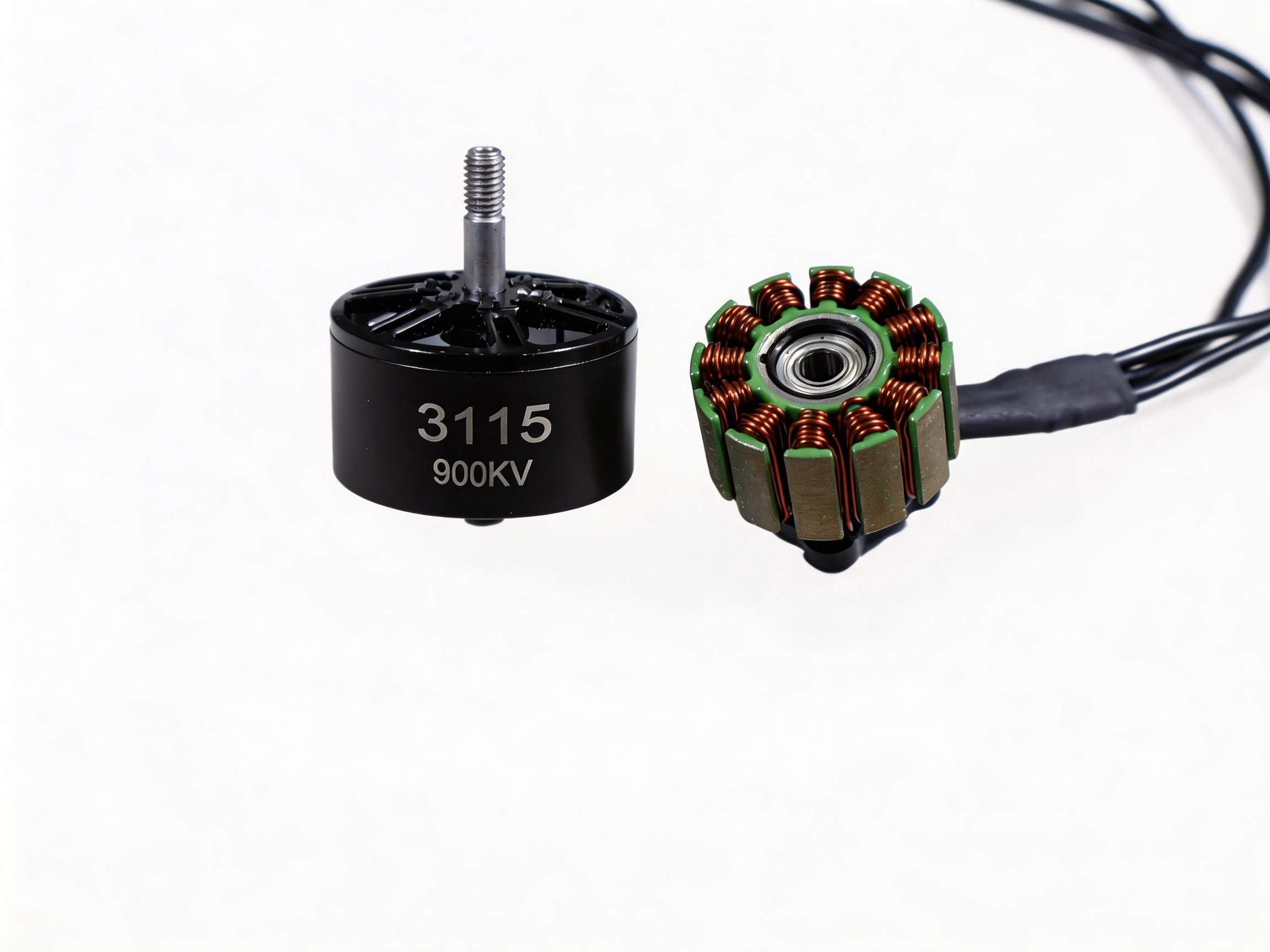
| 3115 | 900KV | 4,600g | 10 inch | 6S | Light mapping and agile builds |
| 4312 | 380KV | 13,000g | 13×5 inch | 8S to 12S | Heavy mapping and LiDAR |
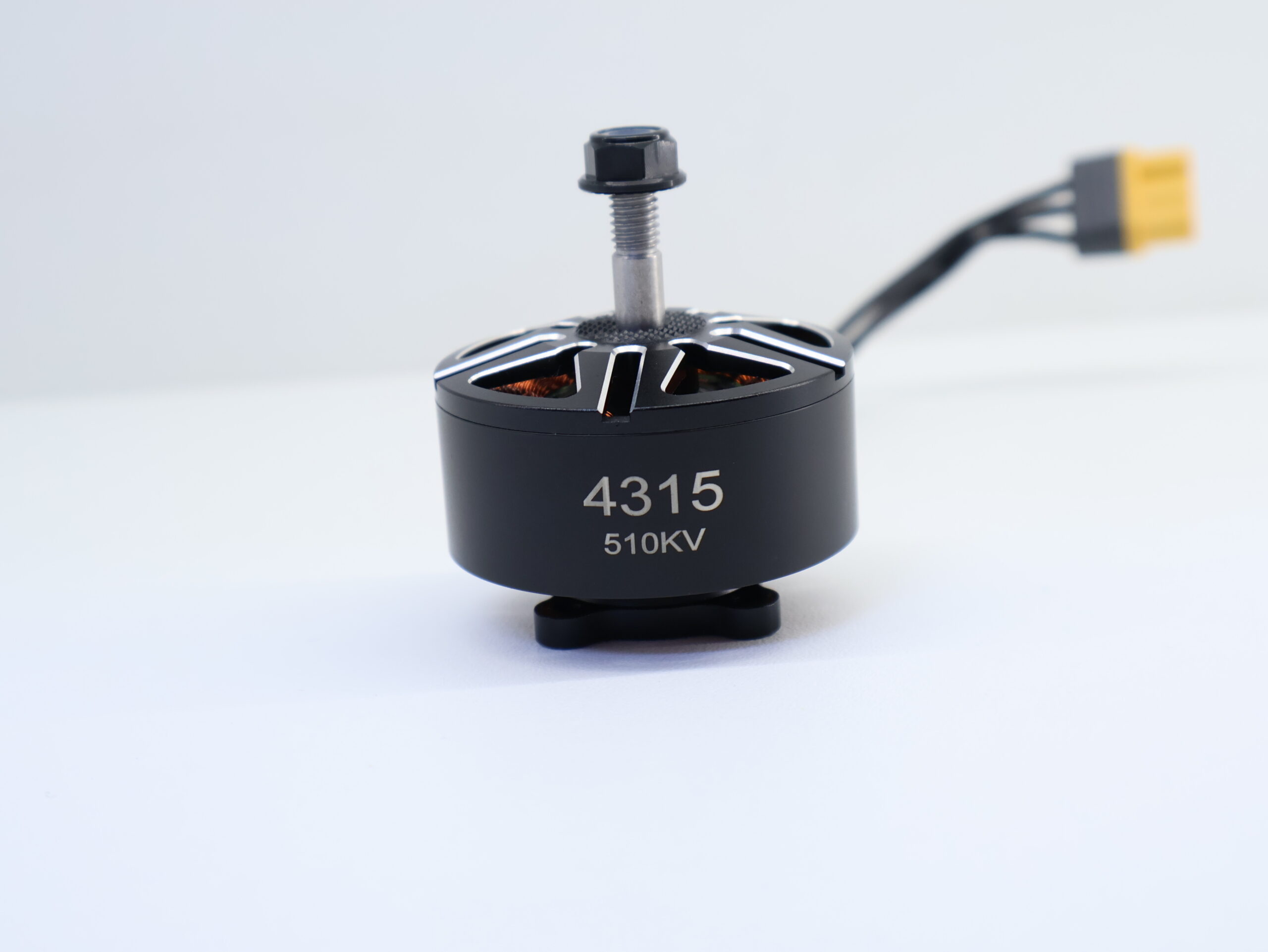
| 4315 | 600KV | 7,200g | 13×5 inch | 8S | Inspection and patrol |
| 4320 | 350KV | 12,900g | 13×5 inch | 12S | Heavy lift and delivery |
| 5215 | 420KV | 5,500g | 13×5 inch | 8S | Mid-range agriculture and utility |
| 5008 | 300KV | 2,800g | 17 inch | 6S | Long-endurance low-load builds |
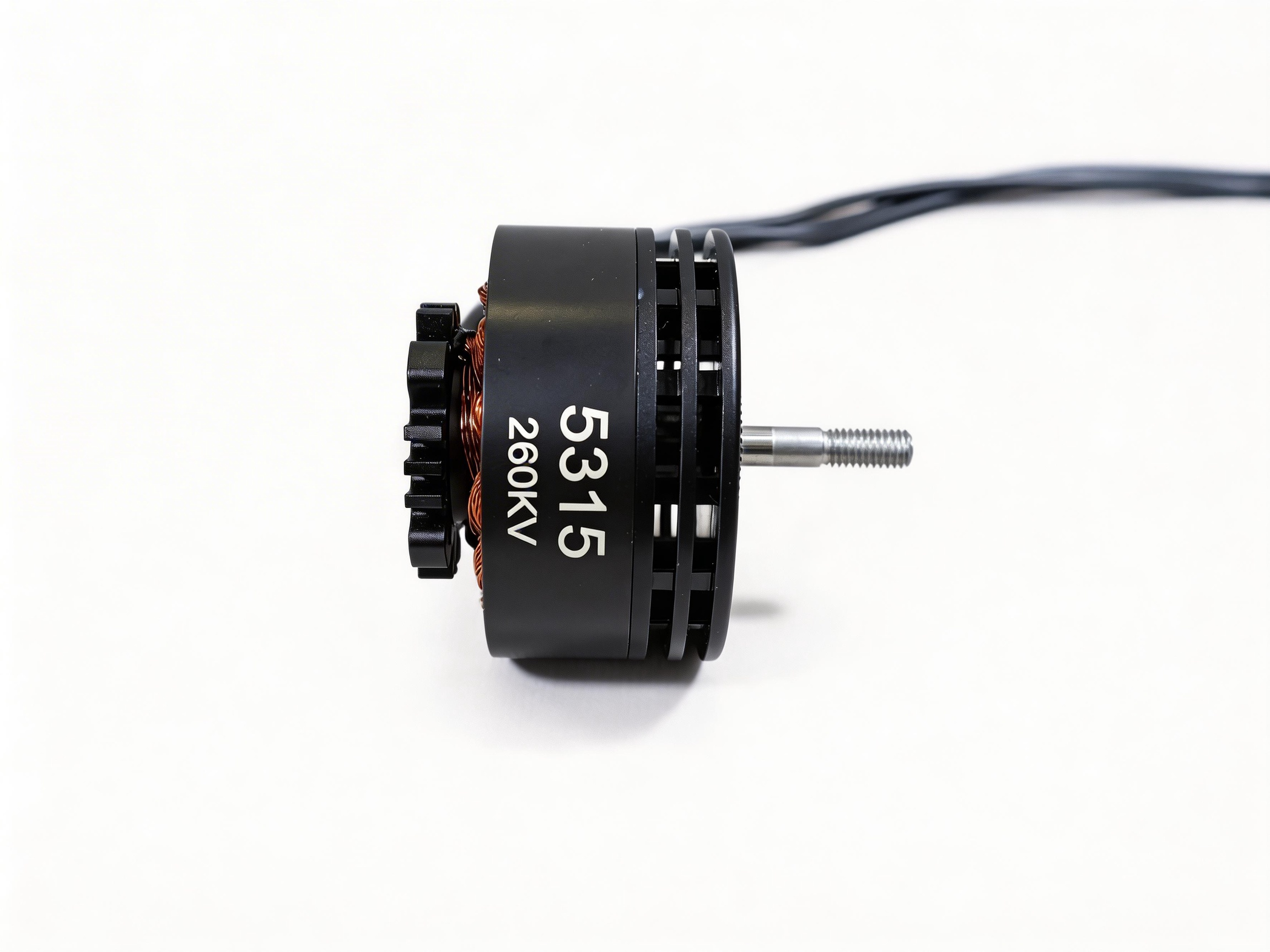
| 5315 | 420KV | 8,400g | 15 to 17 inch | 12S | Heavy agriculture and industrial UAVs |
Selection Scenarios
Scenario 1: 5 kg mapping drone
A 5 kg mapping platform with four motors needs about 2.5 kg target thrust per motor at a 2.0:1 ratio. Therefore, a 3115-900KV setup can be a logical direction for a lighter survey build.
Scenario 2: 15 kg delivery or thermal UAV
A 15 kg aircraft needs much more thrust reserve. As a result, builders often consider a hexacopter or octocopter layout and a 4320-350KV direction.
Scenario 3: 25 to 35 kg agriculture platform
A large agriculture UAV usually benefits from larger propellers and a 12S system. In that class, the 5315-420KV is the stronger fit.
Takeaway: if the thrust math looks too aggressive for a quad layout, change the aircraft architecture before forcing an undersized motor into the job.
Frequently Asked Questions
How do I choose the right drone motor KV?
Start with the propeller size and mission type. Generally, larger props need lower KV, while smaller props often need higher KV.
How much thrust should a drone motor have?
A common starting point is total thrust at about double the loaded takeoff weight. However, harder missions usually need more margin.
Is 12S better than 6S for industrial drones?
For many heavier UAVs, yes. In practice, a 12S system often reduces current draw and helps thermal behavior.
Can I mix different motor models on one multirotor?
No. Instead, use the same motor model and matched propellers across the whole aircraft.
Why is stator size so important?
It helps show the motor’s torque and power class. In addition, it explains why two motors with similar KV can behave differently.
Do Pi Thrust motors support OEM or ODM customization?
Yes. Pi Thrust supports custom requirements for suitable factory-direct project orders.
How long do industrial drone motors usually last?
Service life depends on duty cycle, temperature, dust, vibration, maintenance, and crash history. Still, correct sizing usually improves life.
Need Help Choosing the Right Motor?
What to send for a recommendation
Send your loaded takeoff weight, propeller size, battery voltage, motor count, payload type, and mission scenario.
How to contact Pi Thrust
- Email: info@pithrust.com
- WhatsApp: +86-198-7242-8734
- Website: https://pithrust.com/
- Alibaba Store: https://diyfpv.en.alibaba.com
Factory-direct advantages: industrial-grade materials, customization support, technical guidance, and a motor lineup built for commercial UAV integration.

 English
  Arabic
  French
  Russian