
Испытание тяги двигателя дрона: как мы измеряем характеристики и что означают эти цифры
Значение максимальной тяги, указанное в техническом паспорте двигателя, — это самый часто цитируемый, но при этом наименее полезный показатель при сборке дронов. На самом деле важно именно как изменяется тяга в пределах рабочего диапазона. На нашем заводе мы подвергаем каждую конструкцию двигателя полному циклу регулирования дроссельной заслонки 10%-100% на откалиброванном динамометре. В этой статье рассказывается, как мы проводим испытания, как на самом деле выглядят полученные данные и как правильно интерпретировать кривую тяги, чтобы вы могли принимать более обоснованные решения при выборе двигателя. Мы будем использовать реальные данные с нашего Бесщеточный двигатель 4315-600 кВ — испытания проводились как в режиме 8S, так и в режиме 6S с использованием одного и того же пропеллера.

Почему испытания на тягу так важны — это не просто маркетинговый показатель
В большинстве технических паспортов двигателей приводится только одно число: максимальное тяговое усилие. Но это все равно что описывать автомобиль по его максимальной скорости, не учитывая при этом расход топлива, разгон и управляемость на скорости 50 км/ч. A кривая тяги в этом и заключается вся суть:
Двигатель потребляет мощность при положении дроссельной заслонки 30% или уже испытывает затруднения? При 50% — типичной точке зависания — каковы фактическая тяга и КПД? А когда вы увеличиваете открытие дроссельной заслонки до 80%, остается ли достаточный запас мощности на случай порывов ветра? Полный прогон дроссельной заслонки даёт ответы на все эти вопросы. Без него вы можете только гадать.
Например, мы не раз сталкивались с ситуацией, когда интеграторы приобретали двигатели, ориентируясь исключительно на характеристики максимальной тяги, а потом обнаруживали, что их гексакоптер на самом деле не может удерживаться в режиме зависания при настройке дросселя 50%, поскольку в среднем диапазоне эффективность резко падает. Это ошибка, которая обходится в шестизначную сумму — и которую допускают только один раз.
Наш испытательный стенд: как мы на самом деле измеряем производительность
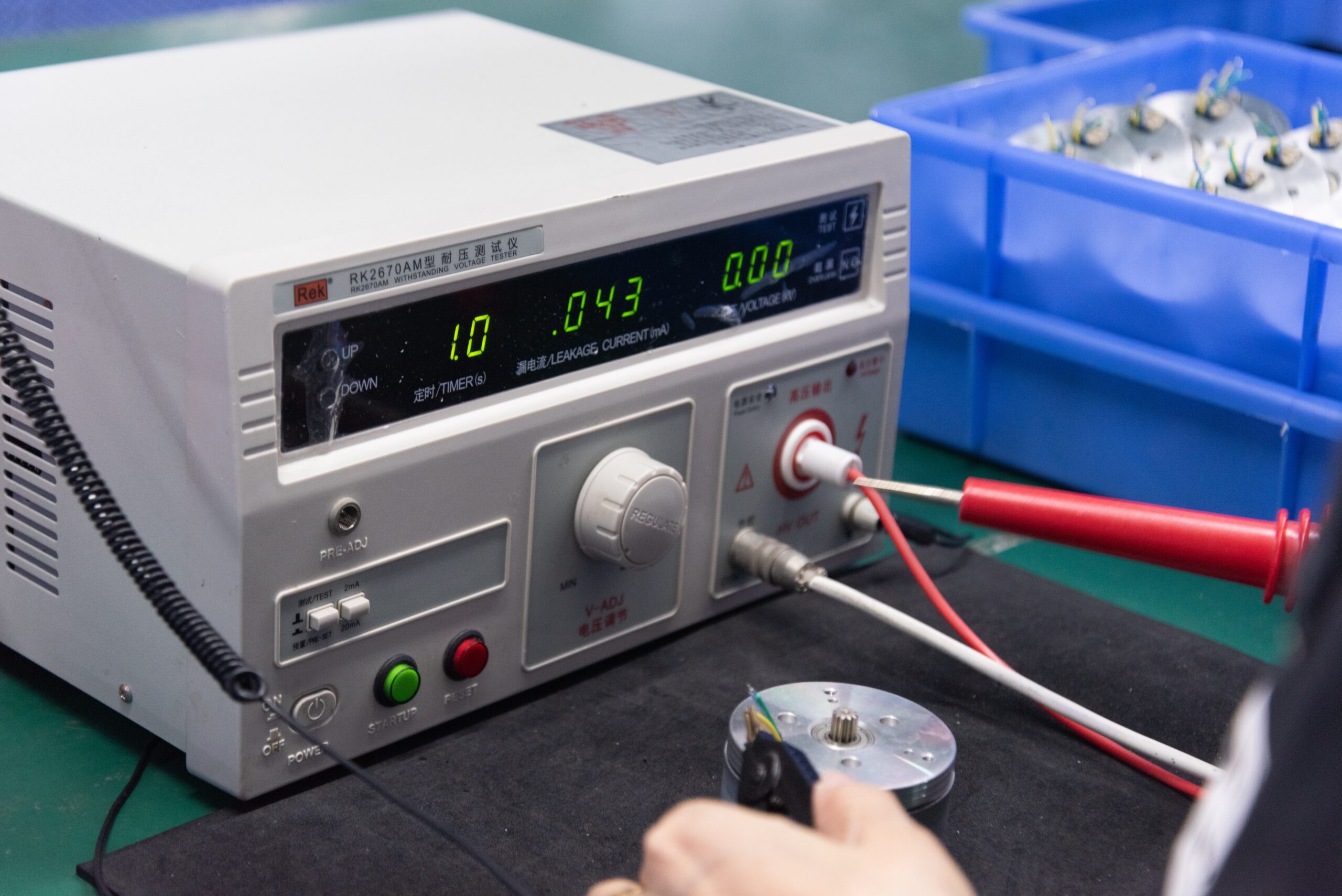
Все стендовые испытания Pi Thrust проводятся на откалиброванном динамометре при Температура окружающей среды 25 °C. В частности, мы используем стабилизированный источник питания постоянного тока, настроенный на номинальное напряжение двигателя (а не разряжающийся LiPo-аккумулятор, у которого напряжение падает под нагрузкой, что искажает результаты). Вот схема установки:
Стабилизированный источник питания — это ключевой момент. Напряжение реальной LiPo-батареи во время полёта падает с 33,6 В (полностью заряженная) до ~29 В (разряженная). Если проводить испытания с частично заряженной батареей, показатели тяги будут на 10–15% ниже, чем те, которые двигатель фактически развивает при использовании свежей батареи. Другими словами, мы полностью исключаем эту переменную.
Как читать кривую тяги: реальные данные по 4315-600 кВ
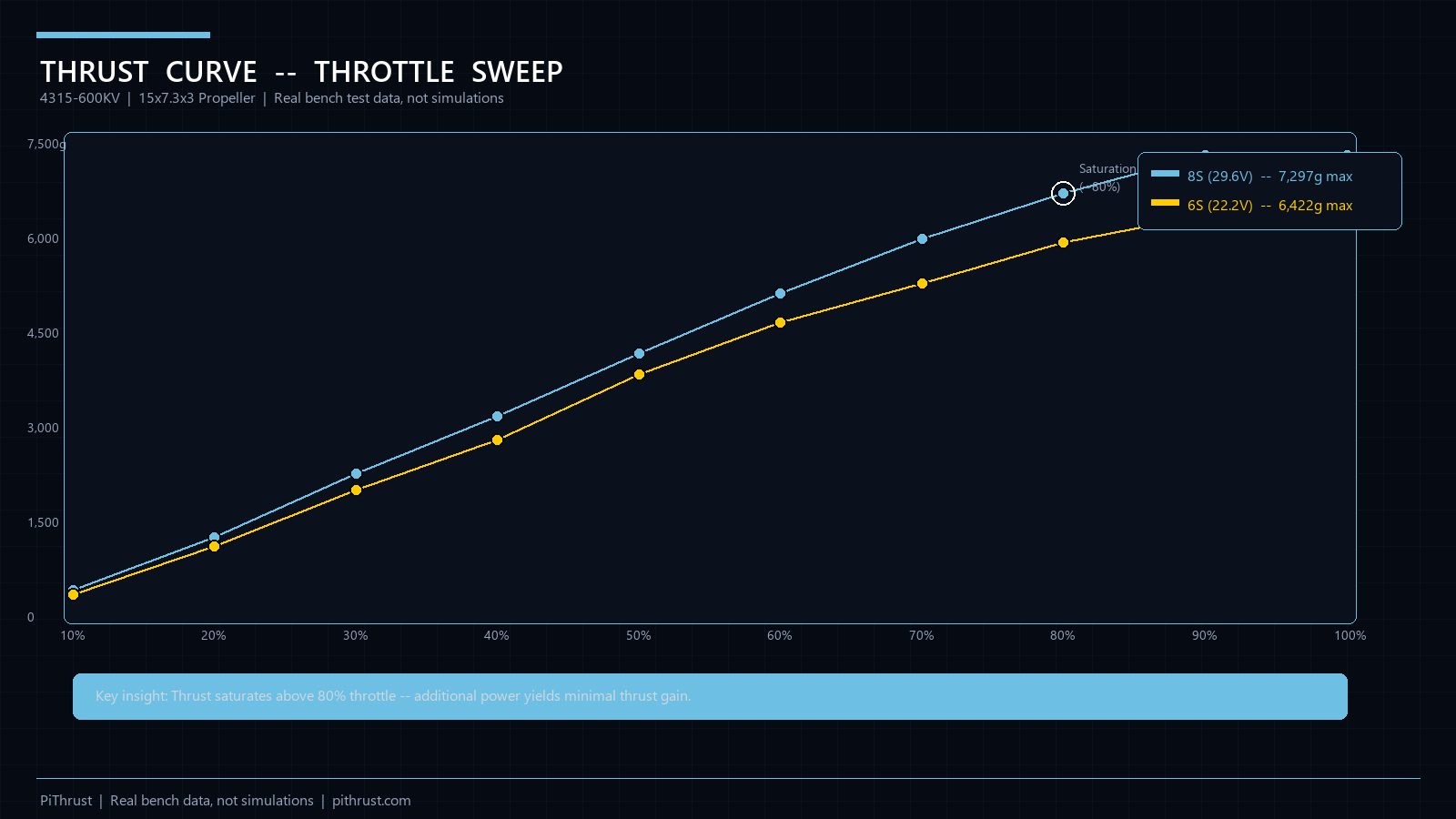
Для понимания контекста привожу фактические тестовые данные для нашего 4315-600KV двигатель с трехлопастным винтом размером 15×7,3×3 при 8S (номинальное напряжение 32 В). Это промышленный двигатель среднего размера, широко используемый в геодезических и инспекционных дронах.
Что показывает кривая эффективности
Если посмотреть на цифры, то показатель 4315 достигает максимума на уровне 8,28 Г/В при положении дроссельной заслонки 10% — это диапазон сверхэффективной работы на холостом ходу, который полезен при медленном парении или на этапах перехода на платформах вертикального взлета и посадки. Практический диапазон крейсерского режима (30–50% дроссельной заслонки) находится в пределах 4,53–6,18 г/Вт. Для гексакоптера, оснащённого шестью такими двигателями с уровнем открытия дросселя 50%, суммарная тяга в режиме зависания составит примерно 19 кг, а общая потребляемая мощность — около 4 250 Вт, что вполне по силам аккумуляторной батарее 8S ёмкостью 22 000 мА·ч, обеспечивающей 20–25 минут полёта.
Между тем, при значении выше 70% кривая КПД резко падает — с 3,48 Г/Вт при 70% до 2,64 при 100%. Это нормально: Каждый двигатель с внешним ротором жертвует КПД ради максимальной тяги на высоких оборотах. Главное, что нужно запомнить: максимальная тяга — это показатель для экстренных ситуаций, а не рабочая точка. Если для зависания вашему дрону требуется открытие дросселя более 70%, значит, вы выбрали неподходящий двигатель.
8S против 6S: один и тот же двигатель, разное напряжение
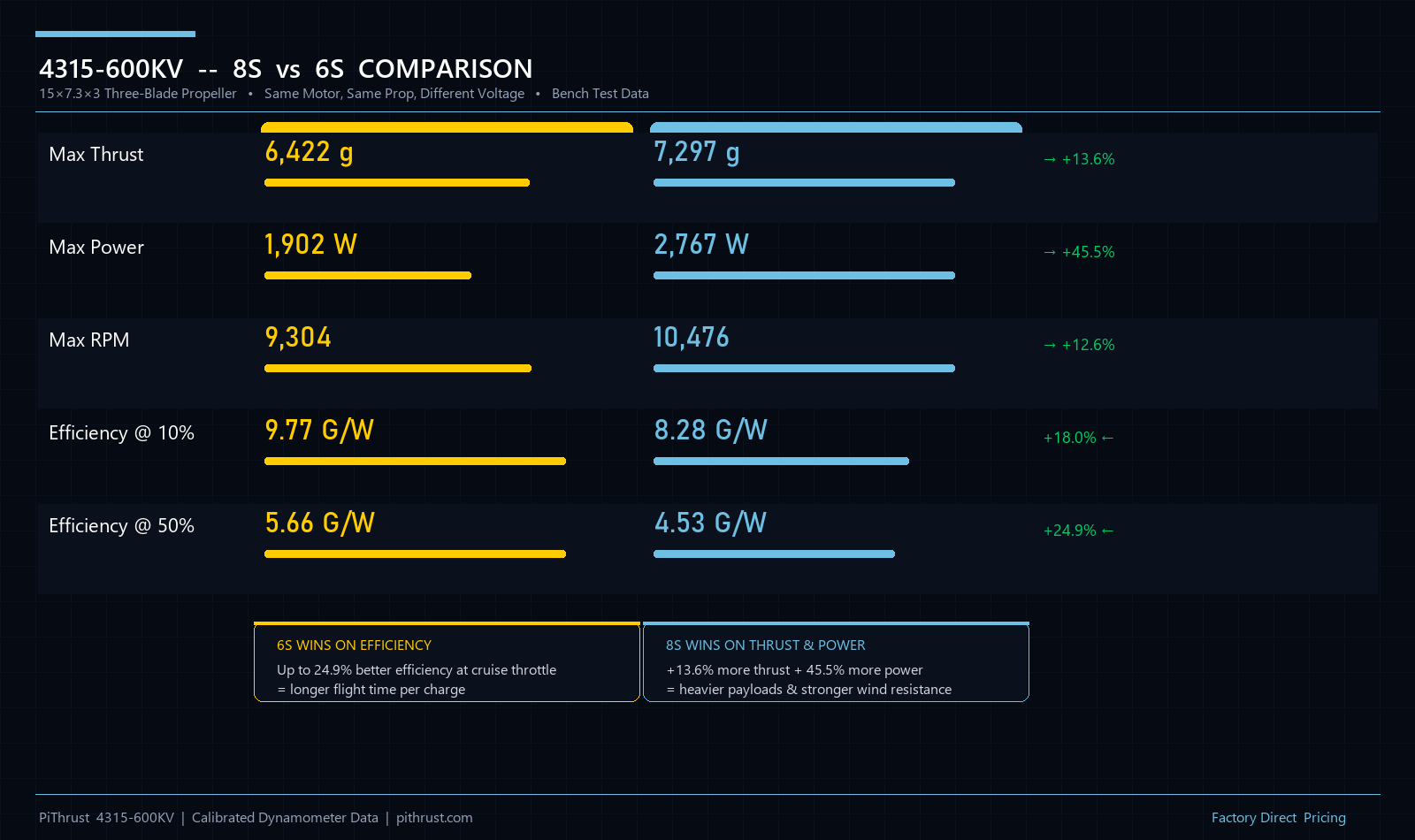
Мы запустили ту же модель 4315-600KV на 6S (номинальное напряжение 24 В) с тем же пропеллером размером 15×7,3×3. Тот же двигатель, тот же пропеллер — другое напряжение, совершенно иное поведение:
Удивительный результат: 6S демонстрирует более высокую эффективность при любом положении дроссельной заслонки — на 24,91 TP3T лучше при открытии дросселя на 501 TP3T. Однако конфигурация 8S обеспечивает большую абсолютную тягу (+13,61 TP3T) и значительно более высокую пропускную способность по мощности (+45,51 TP3T). Таким образом, для сельскохозяйственного дрона, которому нужна максимальная подъёмная сила, лучше выбрать 8S. Для платформы картографирования с длительным временем полёта, где важен каждый ватт-час, 6S может оказаться лучшим выбором, даже несмотря на немного меньшую предельную полезную нагрузку.
3 показателя, которые важнее максимальной тяги
Когда вы откроете техническое описание двигателя, не обращайте внимания на выделенное жирным шрифтом число "7 200 г" в заголовке. Вместо этого обратите внимание на следующие данные:
1. КПД при положении дроссельной заслонки 50%. Это ваша точка 'парения». Если двигатель развивает 5 000 g при 100%, но достигает лишь 3,0 G/W при 50%, время полёта сокращается вдвое. Показатель 4,53 G/W у двигателя 4315 при 50% — это отличный результат для двигателя весом 218 г: это означает, что вам потребуется примерно 700 Вт на каждый двигатель, чтобы удержать в воздухе 3,2 кг.
2. Тяга при открытии дроссельной заслонки на 70–80%. Это ваш запас на порывы ветра. Если для зависания вам требуется тяга 60%, а двигатель обеспечивает лишь 15% дополнительной тяги до достижения 100%, то при одном порыве ветра вы окажетесь на полном газу без какого-либо запаса. Модель 4315 при 70% развивает тягу 5 331 г — это запас в 66% выше точки зависания 50%. Этого более чем достаточно.
3. Потребляемый ток при заданной тяге. Мощность (Вт) = V × I. При положении дроссельной заслонки 50% на батарее 8S двигатель 4315 потребляет 22,45 А. Умножьте это на шесть двигателей = 135 А. От этого зависят размеры вашего ESC, сечение проводов и номинальный ток разряда аккумулятора. Если вы будете подбирать компоненты, исходя из максимального тока тяги (93 А × 6 = 558 А), вы переборщите с мощностью и добавите лишний вес.
Распространенные ошибки при тестировании, которые делают ваши данные бесполезными
По нашему опыту, мы постоянно сталкиваемся с этими ошибками — как со стороны любителей, так и, время от времени, со стороны профессиональных интеграторов:
Проверка с частично заряженной батареей. LiPo-аккумулятор с напряжением 3,8 В на элемент обеспечивает на 15–20% меньшую тягу, чем тот же аккумулятор с напряжением 4,2 В на элемент. Если вы сравниваете два двигателя с аккумуляторами, находящимися в разном состоянии, то вы сравниваете уровень заряда аккумуляторов, а не характеристики двигателей.
Использование разных винтов в ходе испытаний. Тяга — это показатель производительности двигателя и пропеллера в совокупности, а не характеристика самого двигателя. Замена пропеллера делает сравнение несопоставимым. В нашем тесте 4315 для запусков как на 8S, так и на 6S использовался трёхлопастной пропеллер размером 15×7,3×3.
Без учета температуры окружающей среды. Сопротивление двигателя увеличивается с ростом температуры. Двигатель, испытанный при температуре окружающей среды 15 °C, будет показывать другие показатели, чем тот же двигатель при 35 °C. Мы проводим стандартизацию при температуре 25 °C.
Часто задаваемые вопросы
Как измерить тягу двигателя дрона?
В частности, мы используем откалиброванный динамометр с тензодатчиком и стабилизированным источником питания постоянного тока, работающим при номинальном напряжении двигателя. Двигатель проходит полный диапазон регулирования мощности от 10% до 100% с шагом 10%, с 10-секундной задержкой на каждом шаге для тепловой стабилизации. В каждой точке мы фиксируем напряжение, ток, число оборотов в минуту, тягу (в граммах) и температуру двигателя.
Что важнее — максимальная тяга или эффективность?
На практике именно эффективность при работе на режиме зависания (обычно 45–55%) определяет продолжительность полёта, а именно это и важно для операторов. Максимальная тяга имеет значение лишь как запас прочности на случай порывов ветра и аварийных маневров. Мы рекомендуем подбирать двигатели таким образом, чтобы точка зависания приходилась на диапазон 45–55%, оставляя верхний диапазон 30% в качестве запаса.
Означает ли более высокое напряжение всегда большую тягу?
Для одного и того же двигателя и пропеллера да — более высокое напряжение = более высокая частота вращения = большая тяга. Например, наш двигатель 4315-600KV развивал тягу 7 297 г при 8S по сравнению с 6 422 г при 6S (+13,61 TP3T). Однако при более высоком напряжении эффективность снижается, особенно в диапазоне крейсерной скорости. При 6S эффективность была на 24,91 TP3T выше при открытии дросселя на 501 TP3T. Компромисс реальный: большая тяга против более длительного времени полёта.
Какой размер пропеллера обеспечивает наилучшие показатели тяги?
Это полностью зависит от показателя KV и напряжения двигателя. Как правило, рекомендуемый диаметр пропеллера для двигателя примерно равен диаметру его статора, умноженному на 0,3–0,35 для трехлопастных пропеллеров. Модель 4315 (статор 53 мм) хорошо сочетается с трёхлопастными пропеллерами размером 15–16 дюймов. Использование слишком большого пропеллера приводит к перегрузке двигателя и резкому снижению КПД.
Насколько точны заявленные производителем характеристики тяги?
Это зависит от ситуации. Например, в компании Pi Thrust мы публикуем данные испытаний непосредственно с нашего динамометра — все технические характеристики наших руководство по выбору двигателя основано на том же протоколе испытаний, который описан в данной статье. Некоторые производители указывают теоретические максимальные значения, не уточняя тип пропеллера, напряжение или условия испытаний. Всегда запрашивайте данные по всему диапазону оборотов на полном газу, а не только пиковое значение.
Приобретите двигатели Tested Motors от Pi Thrust
Каждый двигатель Pi Thrust поставляется с полными данными испытаний — не только с максимальными показателями, но и с результатами 10-точечных испытаний при различных режимах работы двигателя, с различными винтами и напряжениями. Более того, наши 4315-600KV а также шесть других моделей моторов имеются в наличии, причем Срок выполнения заказа — 3 дня и 12-месячная гарантия. Мы поможем вам выбрать подходящий пропеллер, определить размеры ESC и проанализировать результаты испытаний для вашего конкретного летательного аппарата.
Как заказать или запросить тестовые данные
- Веб-сайт: pithrust.com — полный каталог продукции с тестовыми данными, доступными для скачивания
- Alibaba: diyfpv.en.alibaba.com — гарантии торговых операций, заказы на поставку образцов
- Электронная почта: info@pithrust.com — технические вопросы, запросы по изготовлению намоток на заказ
- WhatsApp: +86-198-7242-8734 — самый быстрый ответ

 English
  Arabic
  French
  Russian