
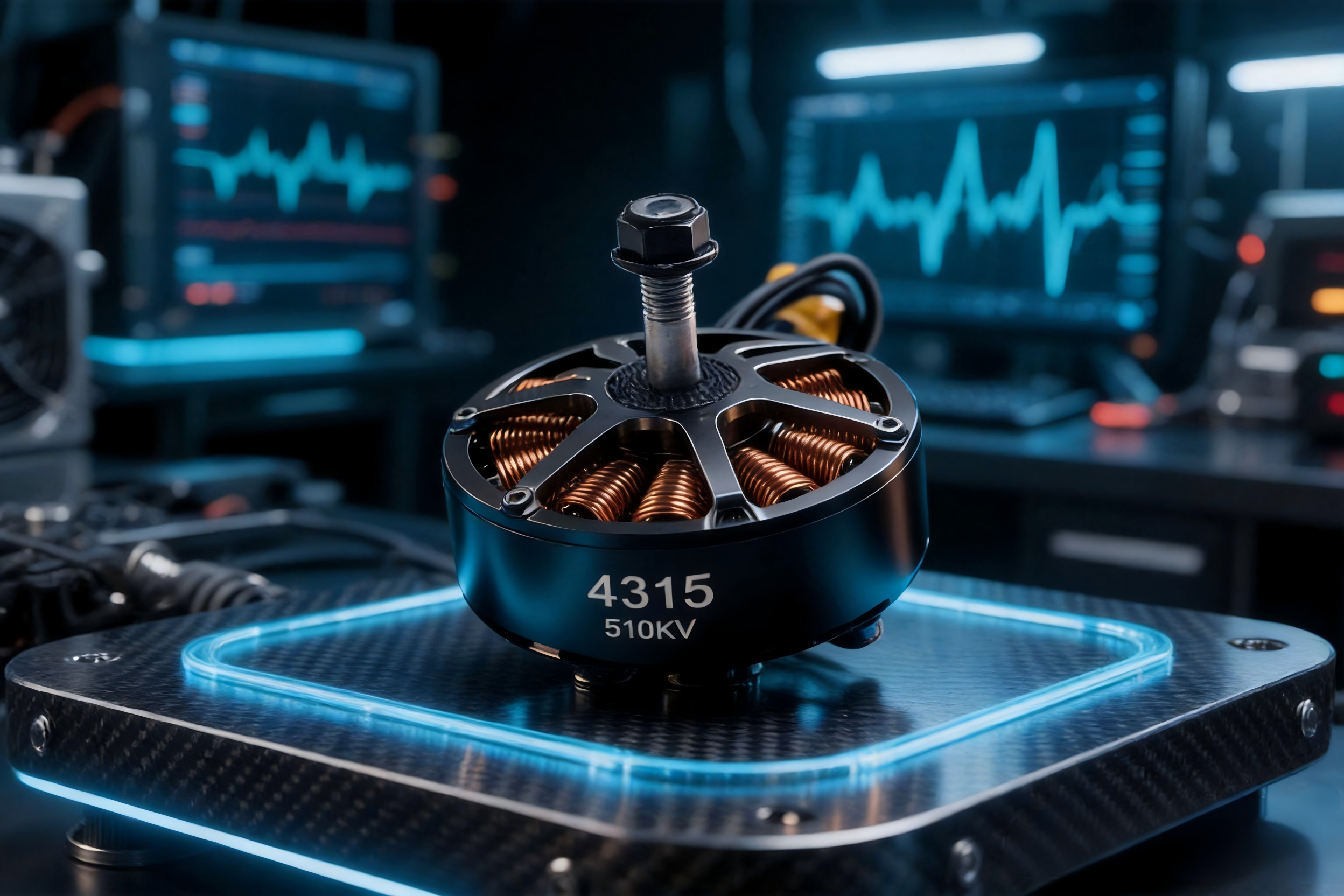
التوافق مع محرك PiThrust FOC: تم اختباره على مقاعد البدلاء في جميع الطرازات السبعة
أثار هذا الاختبار مشكلة حقيقية
قبل ستة أشهر، على سبيل المثال، قام أحد العملاء في ألمانيا بإقران محركات 4315-600 كيلو فولت مع نظام التحكم الإلكتروني ذي العلامة التجارية FOC ESC. استمرت المحركات في فقدان المزامنة أثناء التحليق البطيء.
وبطبيعة الحال، ألقت الشركة المصنعة لمحرك الجهد الكهربائي باللوم على المحركات. طلبنا منه إعادة شحن واحد للاختبار بدلاً من ذلك.
كان المحرك على ما يرام - كانت الإعدادات الافتراضية لنظام التحكم الإلكتروني في المحرك خاطئة
ومع ذلك، فقد تم فحص المحرك على مقعدنا: توازن لف مثالي، ومحامل نظيفة، ومحرِّض متناسق في جميع المراحل الثلاث. في الواقع، كانت المشكلة الحقيقية تكمن في أن معلمات FOC الافتراضية لمحرك ESC تم ضبطها على محركات السباق بجهد 2300 كيلو فولت، وليس المحركات الصناعية بجهد 600 كيلو فولت.
يحدث عدم التطابق هذا في كثير من الأحيان أكثر مما ينبغي
من ناحية، يقول مصنعو المحركات أن محركاتهم تعمل مع FOC. ومن ناحية أخرى، يدعي مصنعو ESC أن وحدات تحكمهم تعمل مع أي محرك BLDC. ومع ذلك، لا يعطيك أي من الجانبين البيانات للتحقق من ذلك. هذه الفجوة، باختصار، هي بالضبط سبب إجرائنا لسلسلة الاختبارات هذه.
لماذا التوافق مع مركز العمليات الأجنبية ليس مجرد حديث تسويقي
التركيز البطيء أصعب على المحرك من الخطوات الست
على وجه التحديد، يمكن للمحرك الذي يعمل بشكل مثالي على نظام ESC شبه المنحرف الأساسي أن يربك وحدة تحكم FOC. الأعراض خفية: تعمل المحركات بسخونة أكبر، وتفقد المزامنة عند عدد دورات منخفض في الدقيقة، ولا تتحقق مكاسب الكفاءة أبدًا.
في الواقع، لا تدخن المحركات. وبدلاً من ذلك، فإن أداءها ضعيف بطرق يصعب تشخيصها دون إجراء اختبارات مضبوطة.
هناك ثلاثة أشياء، من الناحية العملية، تحدد الأداء الحقيقي لمركز العمليات الأجنبية
على وجه التحديد: توازن اللف، والمادة المغناطيسية، ودقة المحمل. سنعود إلى كل منها. لكن أولاً - الأرقام.
ما تناولناه قبل هذا الاختبار
في بحثنا المتعمق السابق عن كيف يغير الذكاء الاصطناعي التحكم في محركات الطائرات بدون طيار, قمنا بتغطية نظرية تبديل التركيز الأوتوماتيكي الحر مقابل التبديل سداسي الخطوات وأظهرنا مكاسب في الكفاءة في 12-22% مع 5315-420KV.
ومع ذلك، فإن هذه المقالة تذهب إلى أبعد من ذلك: بيانات التوافق الخام عبر كل محرك في مجموعتنا، بدءاً من المحرك الذي يسأل عنه العملاء أكثر من غيره.
إعداد الاختبار - لا توجد حيل معملية
لماذا استخدمنا البرامج الثابتة العامة
اختبرنا على حامل دفع تمت معايرته باستخدام جهاز FOC ESC من طرف ثالث يعمل على برنامج ثابت مفتوح المصدر - وليس وحدة مضبوطة من الشركة المصنعة. إذا نجح المحرك على معلمات FOC العامة، فسوف ينجح على أي شيء.
إذا عانى المحرك، فهذا يخبرنا بشيء حقيقي عن المحرك، وليس عن نظام التحكم الإلكتروني.
أربعة قياسات عبر نطاق الصمام الخانق
- سلاسة الدوران: من 5% إلى 100% خنق بزيادات 5%
- تموج التيار: السعة في الحالة المستقرة
- درجة حرارة اللف: بعد 10 دقائق عند الصمام الخانق 70%
- سلوك فقدان المزامنة: أثناء التغييرات السريعة في الخانق
استخدمت في جميع الاختبارات مراوح ثلاثية الشفرات مقاس 15×7.3×3 مع التحكم في البيئة المحيطة عند درجة حرارة 25 درجة مئوية.
4315-600 كيلو فولت: ما تقوله بيانات الصمام الخانق الكامل
لماذا يُعد المحرك 4315 هو محركنا القياسي
إنه محركنا الأكثر شيوعًا لطائرات الفحص والطائرات بدون طيار الأمنية - وهي التطبيقات التي يكون فيها التحليق المستقر والفيديو السلس أكثر أهمية من قوة الدفع الأولية. في الواقع، إذا كان محرك FOC يحدث فرقاً في أي مكان، فهو هنا.
4315-600 كيلوفولت 4315-600 كيلوفولت مواصفات
8S المدخلات | NSK المحامل | N52H المغناطيس | 218g الوزن | 24.4 متر مكعب المقاومة الداخلية | 7,200g أقصى دفع
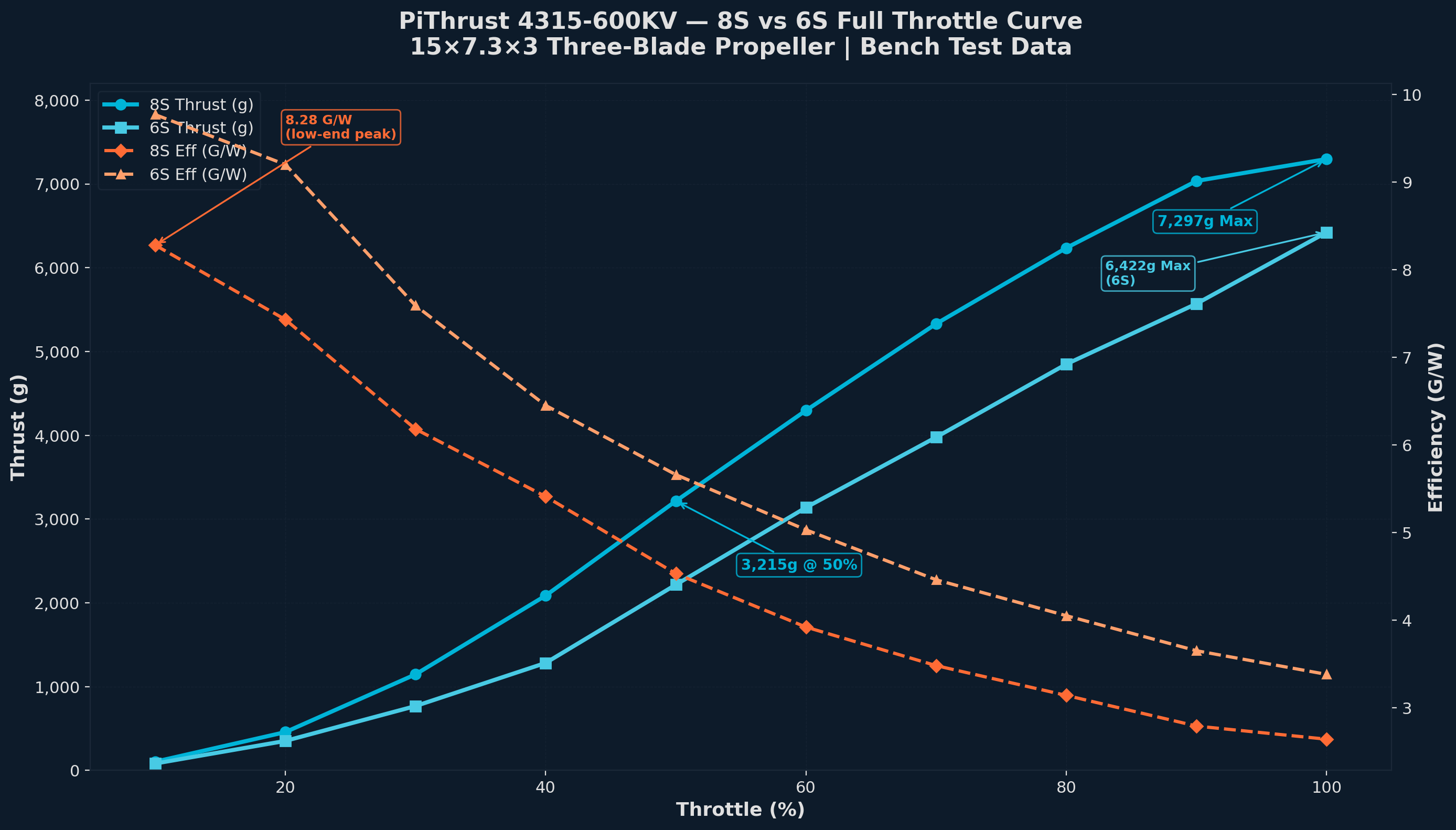
8S أداء 8S من 10% إلى 100% الخانق
عند صمام الخانق 10%، سحب 4315 0.39 أمبير فقط عند 32 فولت - بالكاد 12.6 واط - وأنتج 104 جم من قوة الدفع. عند هذا الحد المنخفض، بلغت الكفاءة 8.28 جيجا واط.
عند الصمام الخانق 50%، كانت تنتج 3,215 جم عند 709 واط. عند الصمام الخانق الكامل، بلغت ذروتها عند 7,297 جم عند 2,767 واط، 93 أمبير.
النتيجة الحاسمة: عدم فقدان المزامنة عند أي خطوة من خطوات الصمام الخانق من 10% إلى 100%. ظل التموج الحالي أقل من 3% عبر النطاق بأكمله. هذا هو المحرك يفعل بالضبط ما تطلبه وحدة التحكم.
مقارنة 6S - ما الذي يتغير عند الجهد المنخفض
عند 6S مع نفس الشفرة ثلاثية الشفرات مقاس 15 بوصة، وصل 4315 إلى 6422 جرامًا على 1,902 واط. ومن المثير للاهتمام، أن الكفاءة المنخفضة كانت أعلى في الواقع - 9.77 جيجاوات/وات مقابل 8.28 في 8S.
لكن عزم الدوران ينخفض بشكل أسرع في الطرف العلوي. ولذلك، إذا كنت تقوم بتشغيل FOC على 6S، فخطط لحمولتك حول النقطة الحلوة للصمام الخانق 50-70% حيث تثبت الكفاءة فوق 5 G/W.
جميع المحركات الـ 7 لمحة سريعة عن التوافق مع FOC
نفس البروتوكول، كل محرك
قمنا بتشغيل كل محرك في المجموعة من خلال بروتوكول الاختبار نفسه. إليك الملخص.
ما الذي تخبرك به التقييمات
في النهاية، حصلت خمسة من أصل سبعة محركات على خمس نجوم. ومع ذلك، أظهر المحرك 5215 تلعثمًا طفيفًا أقل من 15% على البرنامج الثابت العام - ليس أمرًا مفسدًا للصفقات، ولكنه جدير بالملاحظة.
إذا كنت تستخدم محركات 5215 مع FOC على طائرة زراعية بدون طيار، تأكد من ضبط البرنامج الثابت ESC الخاص بك على محركات ذات عدد أعمدة منخفض KV وعالية الجهد. وإلا، فإن الإعدادات الافتراضية لن تفي بالغرض في الجزء السفلي من نطاق الصمام الخانق.
ما الذي يجعل المحرك جاهزاً للتشغيل الآلي: 3 أشياء مهمة بالفعل
تُظهر البيانات المحركات التي تعمل - ولكن لماذا؟
بعد مئات الساعات التي قضيناها على مقاعد البدلاء، حددنا ثلاثة عوامل تفصل بين المحرك الجاهز للتشغيل التلقائي والمحرك الذي يدور فقط.
التوازن المتعرج: القاتل الصامت لأداء مركز العمليات المالية
يتحكم FOC في التيار بشكل مستقل في كل مرحلة. إذا كانت إحدى المرحلتين ذات مقاومة أعلى قليلاً، فإن وحدة التحكم تعوض بشكل زائد، وتعمل تلك المرحلة بشكل أكثر سخونة.
في الخطوات الست، لن تلاحظ أبدًا عدم تطابق مقاومة 5%. ومع ذلك، في حالة FOC، يظهر عدم التطابق على شكل حرارة وضوضاء وفي النهاية فشل العزل.
يستخدم كل محرك PiThrust محركات ثابتة ملفوفة يدويًا مع لفات متوازنة ثلاثية الأطوار وأسلاك نحاسية ذات تصنيف 220 درجة مئوية. علاوة على ذلك، نقوم باختبار مقاومة الطور على كل محرك. يجب أن تظل الدلتا بين الأطوار أقل من 2%، وإلا فلن يتم شحنها.
المواد المغناطيسية: N52H مقابل كل شيء آخر
تفقد المغناطيسات قوتها مع ارتفاع درجة حرارتها. تحتفظ N52H بكثافة تدفقها المغناطيسي حتى 120 درجة مئوية - أعلى بكثير مما تراه معظم محركات الطائرات بدون طيار في التشغيل العادي.
وعلى النقيض من ذلك، تبدأ مغناطيسات N35 أو الفريت الأرخص ثمناً في التلاشي عند 80 درجة مئوية. عندما يضعف التدفق، ترى وحدة تحكم FOC محركًا مختلفًا عن الذي تمت معايرته. فتنخفض الكفاءة، ويزداد تموج التيار، ويعمل المحرك أكثر سخونة في حلقة التغذية الراجعة.
لقد رأينا محركات N35 تفقد 8-12% من قوة دفعها الفعالة بعد 200 ساعة من الرش الزراعي. في حين أن محرك N52H يحافظ على قوة دفعه الفعالة في حدود 3% خلال نفس الفترة.
دقة التحمل: تؤثر على التقدير بدون استشعار
يستخدم FOC FOC الترددات الخلفية للمحرك لتقدير موضع الدوار - لا حاجة إلى مستشعرات Hall. تعتمد جودة إشارة التردد الكهرومغناطيسي الخلفي على مدى سلاسة دوران الدوار.
ينتج المحمل الذي يحتوي على تآكل بمقدار 5 ميكرون إشارة أنظف من المحمل الذي يحتوي على تآكل بمقدار 15 ميكرون. يُترجم هذا الاختلاف مباشرةً إلى مدى جودة تعقب وحدة التحكم لزاوية الدوار عند عدد دورات منخفض في الدقيقة.
تتمتع محامل NSK اليابانية - القياسية في كل محرك PiThrust - بتفاوتات تصنيع أكثر صرامة من البدائل العامة. التفاعل المتسلسل: جودة المحمل ← جودة الإشارة ← جودة التحكم ← الكفاءة.
ملاحظات ميدانية من تحويلات FOC الحقيقية
الحالة 1: المسح باستخدام الليدار في أستراليا
تقوم إحدى شركات المسح بتشغيل محركات 4312-380 كيلو فولت على مروحية ثمانيّة 12S تحمل ليدار. لقد تحولوا من مراكز التحكم الإلكتروني شبه المنحرفة إلى FOC منذ ستة أشهر.
ونتيجة لذلك، تُظهر سجلات الرحلات الآن 14% طاقة أقل لكل كيلومتر مربع تم تعيينه. انخفضت تصحيحات الانحراف المتعلقة بالاهتزازات بمقدار النصف تقريباً. وبالتالي، تحسنت كثافة سحابة نقاط ليدار لأن المنصة كانت ببساطة أكثر استقرارًا في الهواء.
الحالة 2: الرش الزراعي في البرازيل
يقوم أحد المشغلين بتشغيل محركات 5315-420 كيلو فولت على أسطول مكون من ثماني طائرات رش بدون طيار - خزانات سعة 20 لترًا، 12S، مهام مدتها 30 دقيقة. وقد تم تحويلها إلى FOC في يناير.
بعد التبديل، انخفض معدل استبدال المحرك من محرك واحد تقريبًا كل شهر لكل طائرة بدون طيار إلى محرك واحد كل أربعة أشهر. بعبارة أخرى: بقيت المحركات كما هي، ولكن تغيرت وحدات التحكم الإلكتروني - وهذا وحده أكثر من ثمن الترقية.
القضية 3: حكاية 5215 التحذيرية
كان لدينا عميل قام بإقران محركات 5215-420 كيلو فولت مع وحدة تحكم كهربائية كهربائية لم يتم ضبط برنامجها الثابت FOC فوق 300 كيلو فولت. بحثت وحدة التحكم عن زاوية التيار الصحيحة طوال الرحلة. كانت المحركات تعمل بدرجة حرارة 12 درجة مئوية أكثر مما ينبغي.
بعد التبديل إلى ESC بمعلمات محرك مهيأة بشكل صحيح، انخفضت درجات الحرارة واستقرت المزامنة. الدرس المستفاد: توافق مركز العمليات الأجنبية هو خاصية نظام وليس خاصية محرك.
أي محرك مع أي ESC: دليل سريع
ما الذي يجب أن تطلبه من مورد ESC الخاص بك
هذه ليست قائمة بعلامات تجارية محددة لمراكز التحكم الإلكتروني. إنها تتعلق بما يجب التحقق منه قبل الالتزام بمجموعة الدفع.
الأسئلة المتداولة
هل يمكنني استخدام أي جهاز تحكم إلكتروني كهربائي FOC مع محركات PiThrust؟
ستعمل معظم أنظمة التحكم الكهربية الكهربائية الحديثة FOC، ولكن تحقق من أمرين. أولاً، يحتاج اكتشاف معلمات المحرك في ESC إلى التعامل مع KV وعدد الأعمدة المحدد الخاص بك. ثانيًا، يجب أن تدعم البرامج الثابتة بدء التشغيل بدون مستشعر في الدقيقة المنخفضة إذا كنت تقوم بتشغيل تطبيقات الفحص أو رسم الخرائط.
تُظهر بيانات الاختبار التي أجريناها أن خمسة من أصل سبعة طرازات تعمل على البرامج الثابتة العامة FOC دون مشاكل. ومع ذلك، فإن الطرازين 5215 و4320 يستفيدان من الضبط حسب كل محرك.
لماذا أظهر 5215 تلعثمًا منخفضًا في الدقيقة في الاختبار الذي أجريته؟
يحتوي الموديل 5215 على عدد أعمدة أعلى ومحرِّض أقل من عائلة 4312/4320. ولهذا السبب، لم يتم تحسين إعدادات البرامج الثابتة FOC الافتراضية العامة لهذه المجموعة.
إنها مشكلة في البرنامج الثابت، وليس عيبًا في المحرك. مع المعلمات المهيأة بشكل صحيح - وتحديدًا كسب مراقب أعلى عند السرعة المنخفضة - يختفي التأتأة.
ما هو التحسن في الكفاءة الذي يجب أن أتوقعه واقعياً؟
في الموديل 5315-420 كيلو فولت، قمنا بقياس 12-22% عبر نطاق الصمام الخانق 40-70% حيث تعمل معظم الطائرات الصناعية بدون طيار. وبالمثل، أظهر 4315-600KV 4315-600KV مكاسب مماثلة عند الصمام الخانق الجزئي.
ومع ذلك، إذا وعدك شخص ما بـ 30% أو أكثر، اسأل عن شروط اختباره. المكاسب الحقيقية حقيقية، لكنها ليست سحرية.
هل أحتاج إلى استبدال محركاتي للتبديل إلى FOC؟
بالتأكيد لا. إذا كانت محركات PiThrust الخاصة بك تعمل على أجهزة ESC شبه منحرف، فستعمل على FOC - في الواقع، من المحتمل أن تكون أفضل بكثير.
الترقية هي مجرد ESC، أو في بعض الأحيان مجرد تحديث للبرامج الثابتة. لا يتغير جهاز المحرك. ما يتغير هو مدى دقة وحدة التحكم في تشغيله.
ما هو محرك PiThrust الذي يعطي أفضل كفاءة FOC؟
عند صمام الخانق 10% على 8S، قدم 4315-600KV 8.28 جيجا/ثانية - وهو أعلى مستوى في اختبارنا عند نقطة الصمام الخانق هذه.
على النطاق الكامل، يعمل المحرك 5008-300 كيلو فولت الأكثر برودة عند 62 درجة مئوية ثابتة ويظهر أقل تموج. في النهاية، تعمل المحركات المختلفة على تحسين المحركات المختلفة. لذا اختر بناءً على استخدامك.
الخطوات التالية عندما تحتاج إلى مساعدة
عندما تصبح أسئلة التوافق تقنية
لتعديل لفات المحرك المخصصة، أو توصيات محددة لمحرك كهربائي كهربائي أو إرشادات ضبط FOC، تواصل معنا مع تفاصيل مشروعك.
ما الذي ترسله للتوصية
أرسل طراز المحرك، وعلامة ESC التجارية وإصدار البرنامج الثابت، وحجم المروحة، وجهد البطارية، ونطاق الصمام الخانق المحدد الذي تواجه فيه المشاكل.

 English
  Arabic
  French
  Russian